Darriane Martin: Closing the Gap of Misinformation
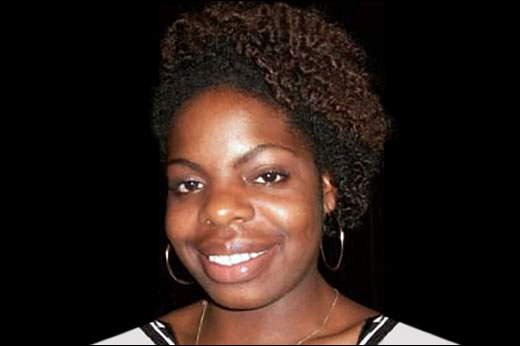
Darriane Martin
Darriane Martin will never forget the frank talks she used to have with her parents about the birds, bees and STDs. In fact, she attributes her desire as a teenager to dive headfirst into sexual-health work to the no-holds-barred conversations.
"I can remember my parents being extremely candid and honest about sexual health," says the 30-something Oklahoma City native, who recently joined the Black AIDS Institute as its mobilization manager. "There was always an open-door policy as it related to any questions I had about sex and sexuality, so I grew up with very little by way of shame or embarrassment as it relates to sex. Knowing that many people, particularly in the Black community, are not privy to a similar upbringing, I wanted to do what I could to lessen the gap of misinformation and lack of education."
For Martin this meant launching a one-person crusade in high school, serving as a youth peer educator and continuing her sexual-health work as an undergraduate at Texas A&M University-Commerce—doing outreach, handing out condoms and even serving as an escort for women who were seeking pregnancy-termination services from the local Planned Parenthood. If it involved the promotion of safe and healthy sex, Martin was all in. "My first official paying job was as an outreach specialist for the Planned Parenthood of Greater Texas," she recalls, "which involved me providing sex education and alternative education programs in local schools, youth criminal-justice centers and gentlemen's clubs. After my first few days, I was hooked! Seriously, who doesn't want to talk about sex and get paid to do it?"
Although her most recent previous position was as manager of a national domestic violence hotline, for the most part Martin has dedicated her young life to spreading the gospel of good sexual health, including holding executive-level positions with AIDS Arms Inc. and Women's Health and Family Planning Association of Texas. "Although the national violence work is obviously vital and necessary for our community, it is not HIV or STD work," she said. "I love talking about and providing education on sexual topics. Quite frankly, I missed this work and desperately wanted to return."
Now back in the sexual-health saddle, with both eyes trained on HIV care, research and prevention, Martin brings her decade-plus of experience to the Institute.
"Over the next few months and through the end of the year, the Black Treatment Advocates Network [BTAN] will certainly be a major priority for me," explains the Bikram yogi. "BTAN is a local network of community-based AIDS service organizations, health departments and other community partners with the goals of 1) linking Black Americans with HIV care and treatment, 2) strengthening local and national leadership, 3) connecting influential peers, 4) raising HIV science and treatment literacy in Black communities, and 5) advocating for policy changes and research policies," she explains. "There are 25 BTAN chapters throughout the U.S., and my priority is to travel to and visit each chapter by the end of 2015. During these visits, [Black AIDS Institute President and CEO] Phill Wilson and I will be providing updates on pre-exposure prophylaxis [PrEP] to build the knowledge base of each local BTAN chapter."
"In addition to my travel and work with BTAN," Martin continues, "I will be traveling to Washington, D.C., for the U.S. Conference on AIDS from Sept. 8 to 13. The Black AIDS Institute will host the Black PrEP Summit, which will provide full-day trainings and meetings.
"Another project I am working on," she continues, "is a conference in Maryland for young Black men. This conference, hosted by the Black AIDS Institute and the Maryland Department of Mental Health and Hygiene Prevention and Health Promotion Administration, will bring together 200 young Black men from four HBCUs—Coppin State University, Bowie State University, Morgan State University and the University of Maryland Eastern Shore—for frank discussions on safer sex, HIV/STD prevention, healthy living and building leadership skills. Finally, I'll work at building relationships with several local health departments throughout the U.S. to bolster relevant local BTAN efforts and promote capacity-building-assistance opportunities to further our efforts to end HIV in Black communities, as that, after all, is the ultimate goal."
Tomika Anderson is a freelance writer whose work has appeared in Essence, POZ, Real Health and Ebony magazines, among others.