Creating Change 2017
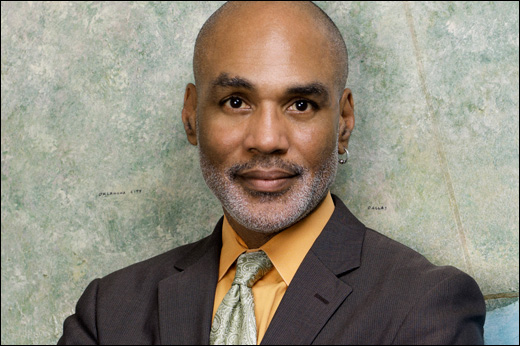
Phill Wilson, President and CEO, Black AIDS Institute
The Following is an excerpt from a plenary speech given by Phill Wilson on January 15, 2017 at the annual National Creating Change Conference in Philadelphia PA.
When you look up the word "convergence" in the dictionary—okay, when you google convergence—you find various versions of the following theme: Convergence occurs when things come together to spark something altogether new.
There are so many things converging in the HIV space today. These convergences can be seen as challenges, opportunities, or both. It all depends on how we experience convergence.
There are new tools converging to create a promise of ending the AIDS epidemic.
- Diagnostic tools. Never before has it been as easy, cheap, fast or important to know your HIV status.
- Surveillance tools let us see the epidemic in ways we couldn't before.
- Early treatment can allow a newly diagnosed person to have almost a normal life expectancy.
- Comprehensive prevention has changed the way we see, think about, and experience HIV/AIDS.
I attended the International AIDS Conference in South Africa last summer. I was also at the first AIDS Conference held in Africa, in 2000. The debate then was "treatment vs. prevention". That was not the debate this year. We now know that treatment and prevention of HIV are inextricably connected. They have converged. We now know, we not only can, but we must, do both.
Yet with all these advances and convergences, a few things cannot be lost on us:
- We have not ended the AIDS epidemic yet.
- We still have intractable foes in stigma, racism, homophobia, transphobia, gender inequity and poverty.
- There is still an inability to see the impact of HIV among people of color and transwomen, within and beyond gay communities.
- If we do not converge awareness, understanding and access with these new biomedical interventions, we risk increasing the HIV/AIDS health disparities that exist based on who you are, who you love, and where you live.
- Finally, and foremost, there is a tremendous uncertainty and a host of unknowns impacting the Affordable Care Act, the National HIV/AIDS Strategy, and funding for HIV and reproductive rights. And I haven't even mentioned immigration, the nature of policing, and government-sanctioned discrimination based on religion or ethnicity.
How we deal with converging thoughts and deeds is more important now than ever before.
As we are gathered here today, Donald Trump is being sworn in as the 45th President of the United States.
Let's be honest, this is not the result that many of us in this room expected or hoped for, or most Americans voted for. It will take many of us a very long time to get over the grief, pain, fear and anger that has been brought about by the election of this president. But getting past those feelings, and back to the work is exactly what we must do.
While the country—and our community, in particular—are facing tremendous uncertainty, there are several things that were true yesterday. They are true today, and they will still be true tomorrow.
We still live in a very divided nation—divided by politics, region of the country where you live, and a host of other things. The economic divide between the "haves" and the "have-nots" is still obscenely wide. The challenges facing working-class and poor Americans are overwhelming. And the difficulties of providing healthcare to all— including the possibility of ending the AIDS epidemic—still loom large.
Much of the progress we have made in recent years can easily be stymied or even wiped out by what the President does, says or tweets. What's going to happen to Roe v. Wade? Will American children whose parents are undocumented immigrants become orphans? Will the Voting Rights Act be further eviscerated? Will marriage equality go the way of prohibition? Will the coarseness of our political discourse become codified into our political system? What's going to happen to the 20 million Americans who currently have health insurance through the Affordable Care Act?
We cannot be bystanders. We do not do well as passive victims. We must use everything in our power to protect our gains and fight for a more—not less—inclusive America. It's not going to be easy to bring our country together. It's not going to be easy to take on the challenges we face. It's not even going to be easy to hold on to the progress we've made in some areas over the past eight years. Those of us living with, at risk of infection, and working in the HIV/AIDS space understand this better than most.
Yes, we have tools that hold the promise of ending the AIDS epidemic, but far too few people who need those tools know they exist, understand how to use them, believe they work or have access to them. The work of ending the AIDS epidemic clearly has gotten more difficult. For some of us, the barriers may even seem insurmountable. But our saving grace has always been that we are not afraid to work—no matter the odds or the size of the barriers. We understand how to find a way out of no way. We know how to push through the darkest times. We know how to capture the possibility, confront the challenges, and care for each other in ways we never have before.
The new President has promised to take us back to a time and place when America was great. I don't know what that means. I do know when it comes to HIV/AIDS, there is no such time or place that I want to go back to. I don't know about you, but no matter what, I am not going back to the early days of the AIDS epidemic.
Every night I take four pills that help keep me healthy. I look at these pills and I realize not one of them can get into my body without my help. What the pills do is biomedical. What I do is behavioral. What we do together is convergence. That convergence creates change. We need to converge protest and disruption, science and treatment, knowledge, passion and commitment—and move forward. We've met adversaries before. We know what to do.
I wish we could just collectively click our heels three times, take a pill, and end the AIDS epidemic, but it's going to take a lot more work than that. We must dream beyond ourselves. HIV does not happen in a vacuum and our response to it cannot happen in a vacuum either. You can't fight HIV and not fight stigma, discrimination and marginalization. And, you can't be serious about racial justice, sexual orientation, gender, or gender identify equality and not care about HIV.
We will prevail if, and only if, we focus, pick our battles, turn toward and not away from each other and expand our allies.
I am a Black gay man of a certain age. And like so many "friends of Dorothy," I believe everything in life can be explained by a scene in the Wizard of Oz. Before November 8th, I believed the AIDS epidemic could be explained by the scene when Dorothy throws the water on the Wicked Witch of the West. She's not made it home yet, but at least the wicked witch is dead.
Now I think we are more like the scene with the flying monkeys. I don't know about you, but that scene still scares the bejesus out of me. But I keep getting up every morning, as difficult as it might be, especially today. And I still find ways to be hopeful, because I know how the movie ends. I know Dorothy eventually does make it back home.
If we come together! If we stay together! If we never give up! If we converge, we will not only create change, we will win. And we to will make it home.
Phill Wilson is President and CEO of the Black AIDS Institute.