BTAN Dallas: Boosting AIDS Literacy for Black Women and Girls
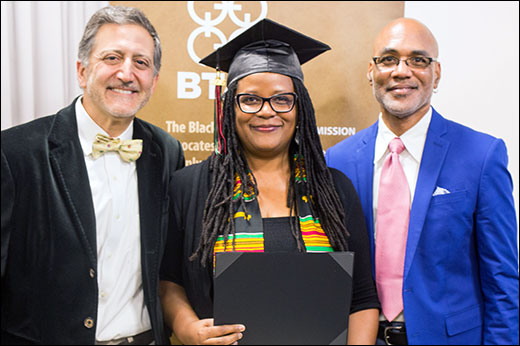
Mukamtagara Jendayi of BTAN Dallas
Thanks to the Black Treatment Advocates Network (BTAN), Black Americans living with HIV/AIDS are getting linked to care, and the Black community is becoming more knowledgeable about the science and treatment of HIV. Women, however, continue to face many challenges when taking control of their health. Mukamtagara Jendayi, deputy director of the Afiya Center, a reproductive-justice organization for women of color, is starting a new BTAN chapter in Dallas. She shares how she is working to ensure that women and girls aren't left behind.
What led you to get involved in the struggle to end HIV/AIDS?
My academic background is women's studies. When I started looking at the different issues that Black women face and why Black women were acquiring HIV at a higher rate than everyone else, I was like, "Wow, this is a way in which I can pursue women's studies and HIV."
You recently held a two-day training event that focused on women and girls.
I did, and that was in conjunction with National Women and Girls HIV/AIDS Awareness Day. I had two programs. One was for women who were already living with HIV. We know that they experience a greater amount of interpersonal violence than women who are not HIV positive. The other one I held at an HBCU, Paul Quinn College, for young women, who were at a higher risk of HIV acquisition due to domestic violence.
Why is it important to focus on women and girls when it comes to HIV/AIDS?
Often, we don't have a voice. We're still not represented, and so that filters into the public health arena as well. It never ceases to amaze us how, if we had a room full of people, huge disparities would exist between race and gender. You could have a White man who has been HIV positive for a year, and a lot of the science that we were teaching, he would already know. But then you could have someone Black, who was 20 years positive, and that person still would have just a beginner's knowledge of the science of HIV. Then, if you had a Black woman, most of the time she would be silent.
Will you continue to focus on women and girls through BTAN?
Dallas does not have a BTAN chapter, so we are building one. We recently had the Dallas PrEP summit and announced that we would hold a BTAN informational meeting. We've already had a response, where people are like, "I can't wait to attend; I want to be a part of it."
There's a pronounced disparity in HIV science and treatment literacy among Black women living with HIV, which negatively impacts their health outcomes. There's a gender disparity in viral suppression. When you look at all groups, women have the lowest viral suppression. Women are less likely to take antiretroviral therapy than men. While, nationally, HIV deaths have decreased in other groups, it still ranks as a leading cause of death for Black women. We shouldn't have that, because now we have the tools, the biomedical tools, to keep us healthy.
What changes do you want to see in Dallas through the work of BTAN?
One of the goals here is to improve the treatment outcomes for women in the Dallas area. This past weekend, there were these two sisters that came up, and they were like, "I know you! You were that woman that came and you taught us about our medications. You told us that we were supposed to start treatment, that we needed to stay on it." They were like, "That was four years ago, and I want to let you know that from what you taught us, we are virally suppressed."
It's a confirmation that I'm doing the right thing, and on the right track.
Tamara E. Holmes is a Washington, D.C.-based journalist who writes about health, wealth and personal growth.