BTAN Baltimore and Baton Rouge Spread the Word About HIV Unconventionally
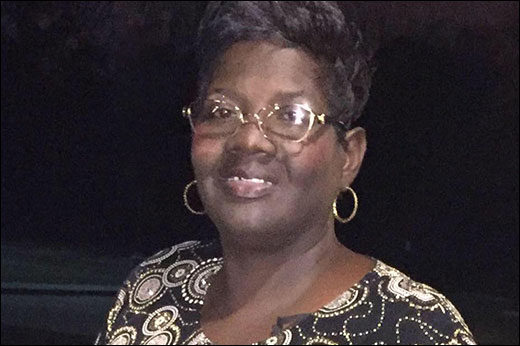
Sharon DeCuir, Advocacy Coordinator at HIV/AIDS Alliance for Region Two Inc.
Raising people's awareness of prevention methods is key to eradicating HIV in Black communities. So Black Treatment Advocates Network (BTAN) chapters nationwide are testing creative strategies to inform and educate underserved populations, with Baton Rouge, La., and Baltimore at the forefront of those efforts.
For nearly two years, BTAN Baton Rouge has been engaging the religious community through Positive Voices, a one-hour radio show on gospel music station WTQT-LP 106.1 FM. The weekly broadcast is moderated by three BTAN members—Eugene Collins and co-hosts Meta Smith and Sharon DeCuir—all staff members at HAART (HIV/AIDS Alliance for Region Two Inc.).
Before the show's launch, HAART CEO Tim Young had been looking for new ways to connect with the community and suggested that Collins, who was already affiliated with talk radio, inquire whether any stations were interested in airing a show covering topics related to HIV and AIDS. The Christian stations were interested. "That's ironic when you think of religion in the South," says Collins.
Making the Connection
Positive Voices takes a holistic approach to HIV, hepatitis and other health topics affecting Black communities. "We talk about depression, the stigma of people living with HIV, HIV in women, HIV in youth; we do shows on any upcoming HIV events, and we share personal experiences," says DeCuir, the co-chair of BTAN Baton Rouge and leadership advocacy coordinator at HAART.
The show reaches younger listeners, who follow on Facebook Live, as well as traditional audiences, ages 35 and older, who tune in to the radio.
"This older lady called in after we mentioned that, theoretically, you could have HIV for over 20 years without a single symptom, and she thought she needed to get tested because although her husband had been dead about 20 years, he used to play around," says Collins, director of prevention at HAART.
Hip-hop and live music help the show connect with millennials. "We've brought Big Freedia in for National Youth HIV and AIDS Awareness, and Michael A.V. Mitchell created a song entitled, 'I Got a Song,' and a rap video about PrEP [pre-exposure prophylaxis] education," says Collins, referring to the New Orleans-based "Queen of Bounce" and a Christian rapper native to Baton Rouge, respectively.
Indeed, HAART noticed a rise in the number of adolescents coming in for HIV testing after a Sunday school teacher heard the show and relayed the information to her teenage students. And one woman even posted on Facebook that she went on PrEP after watching the show on Facebook Live.
Keepin' It Real
Halfway across the country, in Baltimore, BTAN Maryland also looks for novel ways to reach Black communities. Although its plan to launch a radio show has run into a logistical hurdle, the chapter is moving ahead with a movie night featuring the HBO film The Immortal Life of Henrietta Lacks, about a Baltimore woman whose immortalized cells, known as HeLa, were used for medical research for decades without her or her family's consent or compensation, eventually becoming one of the most important breakthroughs in medical history.
"We're using the film as a way of discussing HIV and the rift that exists between public health and the Black community in general," says BTAN Maryland co-chair Aaron Davis, a program manager with the Maryland Department of Health.
Another approach to diversifying HIV messaging is to include HIV in the broader context of overall health. Davis points to stigma as a problem, especially in rural and suburban Maryland counties, where new HIV diagnoses are on the rise. Stigma also makes outreach efforts on HBCU campuses in rural Maryland more difficult.
"You wanna be [effective] on campus? Talk about [how] diabetes is real, high blood pressure is real, pregnancy is real, obesity is real. . . . I think that will help as we normalize HIV into the broader concepts of normal life," says BTAN Maryland's co-chair Lonnie Bishop, PrEP coordinator for the University of Maryland Medical Center's STAR TRACK Program.
Creating Normalcy
In Baton Rouge, Smith observes "stigma in all of its layers." The assistant director of prevention at HAART, Smith points to the stigmatizing impacts that some religious messages, as well as being LGBT, poor and/or Black, can have. "Because for African American communities, the folks that are most at risk are also folks that are experiencing internal stigma. So part of what we do is try to make people realize the only difference between folks living with HIV and the rest of the population is that the folks living with HIV know their status."
BTAN Baltimore co-chairs Davis and Bishop observe that some of the traditional approaches to HIV messaging can exclude segments of the population. "Especially around PrEP," Bishop says. "The message some people communicate is for MSM. You might have somebody that doesn't identify as MSM. Likewise, if you're a gay young man and a women's clinic is the only facility around, you may not want to go to that clinic. It's important to create normalcy in those conversations so you can bring up these topics and bring up HIV just like you're talking about going to the supermarket."
But relationships with the community come first. "You gotta build that trust within the community, and in Baton Rouge, we've been able to do that well," says Collins.
Positive Voices can be heard on WTQT-LP 106.1 FM Saturdays 10:45-11:45 a.m. CST and on the Facebook pages of Eugene Weatherspoon Collins and Meta Smith.
April Eugene is a Philadelphia-based writer.