Book Release: Reflections on Structural Intimacies: Sexual Stories in the Black AIDS Epidemic
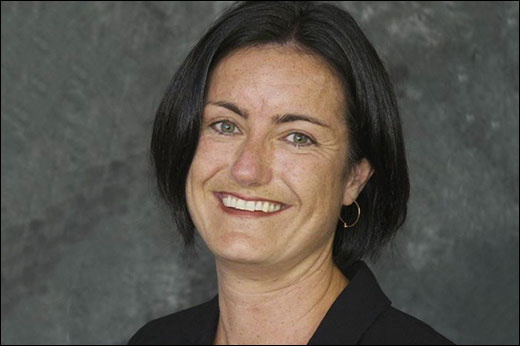
Structural Intimacies: Sexual Stories in the Black AIDS Epidemic (Rutgers University Press, 2013) is a new book from Dr. Sonja Mackenzie addressing the continuing HIV epidemic in the Black population as one of the most pressing issues in contemporary American life. In order to begin to address the question of why rates of HIV infection among African-Americans are reaching levels near or greater than some unindustrialized countries, one must be ready to engage issues of equity and social justice.
Additionally, one must desire to hear the truths of those who are intimately infected and affected by HIV. Dr. Sonja Mackenzie, author of Structural Intimacies: Sexual Stories in the Black AIDS Epidemic, is one of few researchers who does just that. Mackenzie, faculty at the Health Equity Institute and Center for Research and Education on Gender and Sexuality at San Francisco State University, points us to Structural Intimacies, sexual stories produced by the meeting of interpersonal lives and social structural patterns, as a way of understanding and analyzing the HIV epidemic within Black communities.
Found within the pages of her exceptionally written ethnographic work emerge the voices of Black gay, bisexual, and heterosexual folk narrating their own stories of social and sexual inequalities in ways that are often chilling, sobering, heart-wrenching, eye-opening, as well as thought provoking. Moving beyond individual pathology and cultural deficiency interpretations and explanations, Structural Intimacies highlights the complex and intersecting social realities of many African-Americans within this country and our inextricable ties to racism and other forms of cultural domination. To be clear, what is encased in Structural Intimacies are Black people's own social theories and how they attempt to survive in an age of HIV as well as within a white-supremacist country.
What makes this book fresh thoroughly rests on its attention to individual, group, as well as institutional mechanisms that help shape, inform, and produce in many ways the "perfect storm" for the continued spread of HIV within Black communities. The everyday lived experiences of the Black folks within this book reveal an indictment of the "American dream", a confrontation that is simultaneously about the past and the present, the here and the now, as well as the future of Black America and the HIV epidemic.
What I found most striking within Structural Intimacies was the notion that social structures do in fact matter, and produce certain types of being, ways of knowing, and modalities in which we may act. Unlike many scholastic works, Dr. Mackenzie does not simply tell of the systematic hardships of Black folks from the Bay Area and leave it there; on the contrary, she also captures how we persist. In spite of it all--the racism, sexism, homophobia, etc., Black people have continually thrived. Within Structural Intimacies we see and learn about the ways in which Black people have resisted all manner of oppressions. Structural Intimacies: Sexual Stories in the Black AIDS Epidemic is fresh, timely, and long overdue. As new forms of racism and other social forms of domination continue to arise, it is good to know that there are people drawing our attention to root cause issues and not simply addressing symptoms. Works like Structural Intimacies that point to social justice and equity as solutions for so many social injustices are critical.
A book release and panel discussion on Racial Justice and HIV/AIDS in an "AIDS-free era" will be held with the author and Phill Wilson, CEO of the Black AIDS Institute, Naina Khanna and Loren Jones of the Positive Women's Network – USA, and moderated by Dr. Cynthia Gomez of the Health Equity Institute, on Thursday, October 17th, 2013 at the LGBT Center in San Francisco. To RSVP or for more info on the event: https://www.facebook.com/events/1418033285078350
To order the book: http://rutgerspress.rutgers.edu/product/Structural-Intimacies,4774.aspx or contact Dr. Mackenzie at
Durryle Brooks, MA, Doctoral Student in Social Justice Education, UMASS Amherst