By Sharon Egiebor
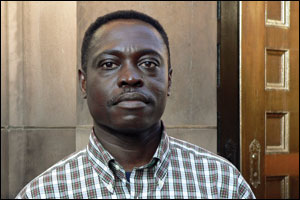
Samuel Agyemang is delving into the secret sex lives of black men. Agyemang, a doctoral candidate at Columbia University’s Teachers College in New York, is conducting a survey men who are African American or of African descent who have sex with men and women. “There is a controversy as to why black, heterosexual women are getting infected with HIV/AIDS. There are people like author J.L. King who assert that men are on the down low and they are spreading HIV disease among black heterosexual women,” said Agyemang, who is conducting the survey for his doctoral thesis. “Somebody like [author] Keith Boykin has a different opinion. Unfortunately, there hasn’t been much scientific research in this area. Most of what we know is from an anecdotal point of view.” Agyemang, is conducting the survey online at www.surveymonkey.com/s.asp?u=52223067900. The site, Agyemang, said was created just for the study and will be taken down upon completion, probably sometime in May. “I thought I could come out with research that would get some information from people who actually do have sex with men and women. I want them to come out with their own story,” he said. Men who are said to be on the “down low” are married or have girlfriends but have sex with men. They hide the fact from the women in their lives. The rate of HIV infections in African American women is continuing to rise and according to the Centers for Disease Control and Prevention, most of the infections are from heterosexual contact. AIDS is one of the leading causes of death for African American women, who represent nearly 70 percent of all new HIV infections in females. King, who does not identify himself as gay, wrote the book “On the Down Low: A Journey into the Lives of ‘Straight’ Black Men Who Sleep with Men.” Boykin wrote “Beyond the Down Low: Sex, Lies, and Denial in Black America,” to refute King’s book and what he described as the implicitly racist and homophobic undertones of the media's coverage. Boykin, in the book, accuses King of serving up another "stereotypical image of black men as pathological liars, surreptitiously satisfying their primitive sexual cravings by cheating on their wives," according to Publishers Weekly. Boykin says in the book that the media should be focusing on the opportunity to responsibly discuss the realities of sexuality, gender, race and AIDS. Donald Powell, Health and Wellness Coordinator for the Gay Men of African Descent (GMAD), based in Harlem area of New York, said African American gay men are frustrated with the down low discussion. “A lot of African American men are still concerned with the stigma of being associated with HIV,” said Powell. “Men who have sex with men (MSM) have been seen as vector’s of the disease, and that is the only identification that they have been given. There is also the stigma of being black MSM in a community that really, really holds masculinity up as a banner of what a black male should be.” Teachers College’s Department of Health and Behavioral Studies is sponsoring the confidential survey. It is exploring condom usage; secrecy, described as self-containment; whether keeping secrets cause, identified as distress disclosure; and psychological well being, Agyemang said. For survey purposes, high-risk behavior is considered sexual contact without a condom. Many of the statements and questions deal with how much secrecy an individual maintains throughout his life. They range from “I have an important secret that I haven’t shared with anyone,” to “Some of my secrets have really tormented me,” to “If something happens to me, I keep it within myself.” Agyemang, 44, who moved to the United States from Ghana five years ago to attend graduate school, said he realizes this is a very sensitive subject and that merely participating in the survey could cause emotional distress. Several community service organizations with hotlines are listed for support. They include Gay Men's Health Crisis; gmhc.org; The survey, which should take between 30-45 minutes, does not offer any compensation. However, the first 200 respondents who finish, can choose to have his email address entered into a random drawing for Best Buy gift cards that range from $100 to $250. “If we find out from the survey that such men do not engage in high-risk behaviors, then it could be that they could also transmit the disease to women,” said Agyemang, who took two human sexuality classes at Teachers College. “But if you find out that the men are protecting themselves and the women they deal with, then it may mean they are not transmitting the disease to the women.”