Addressing Stigma and Misconceptions: Kendra Taylor
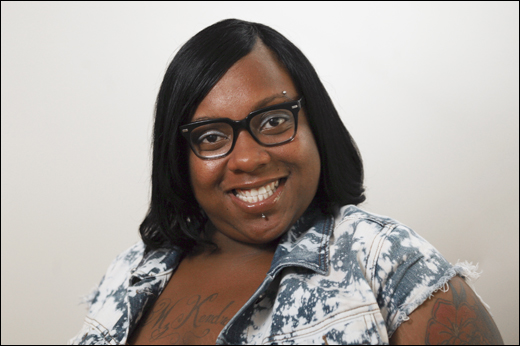
One in a series of profiles of the 2013 Fellows in the Black AIDS Institute's African American HIV University's Science and Treatment College.
Kendra Taylor received a gift for her 24th birthday that she will never forget. The Chicago native was invited to speak at a conference in that city before almost 200 women. She had never spoken to such a large audience before, but to her surprise her presentation was well-received. Taylor believes this was due in large part to the training she had recently received as a Fellow in the Black AIDS Institute's African American HIV University's Science and Treatment College in Los Angeles. "In spite of the expected nervousness, I felt very confident because being in Los Angeles really prepared me to speak in my own words with a deep understanding of the science behind the HIV information I shared," she says.
Taylor works as a peer advocate to HIV-positive patients in the University of Chicago Hospital's HIV clinic. In addition to helping her clients adhere to their treatment regimen, she helps them cope with HIV stigma, which she has come to understand is just as important. "Chicago has such strong stigmas associated with HIV/AIDS, and positive support can make all the difference," she says.
Within two years of being on the job, Taylor determined that she needed to improve her understanding of every aspect of the epidemic, especially the science. "As I became more and more serious about how best to do this work, my boss thought AAHU would be a great opportunity," she says.
The training provided Taylor with new information to improve not only her work in the clinic but also her own well-being. Among the most useful things she learned? PLWHA who smoke cigarettes are more vulnerable to cancer.
"I had been trying to quit for so long, but learning what I did about tobacco and smoking while I was in the training really opened my eyes," she says of the smoking habit she'd had since she was 12 years old. "I haven't smoked a single cigarette since leaving Los Angeles."
The training was particularly helpful in addressing some of the misconceptions many of the people she works with have about HIV/AIDS, treatments, medications and cures. "A lot of the patients I work with haven't had access to a lot of good information about the virus," she says. "Some had heard about the 'Berlin Patient,' Timothy Brown, who was cured of HIV. I actually spoke with Timothy during the training, and now I know that the treatment he received is not an option for everybody. I can share that with others."
The Science and Treatment College also helped Taylor understand that Chicago's high HIV rate threatens future generations. She looks forward to working more with young people—both those at risk and those already HIV positive—to offer them hope and a brighter, healthier future.
"When I was younger, there was no one like me available to help young people learn and understand how to take care of their health, to know about the risks of sexual behavior, as well as the consequences of making bad choices," she recalls.
Taylor believes that the training she received has made it possible for her to make a real difference. "I'm really grateful for going to L.A. to get that information. I did it, and it was wonderful," she says. "I have a lot more learning to do. I want to be one of the people responsible for ending this epidemic."
AAHU's Science and Treatment Fellows are blogging about their experiences. To read the blogs, go here.
Glenn Ellis is a Philadelphia-based health columnist and radio commentator who lectures nationally and internationally on ethics and equity in health care.